
Augmented Reality - Satanic Agenda
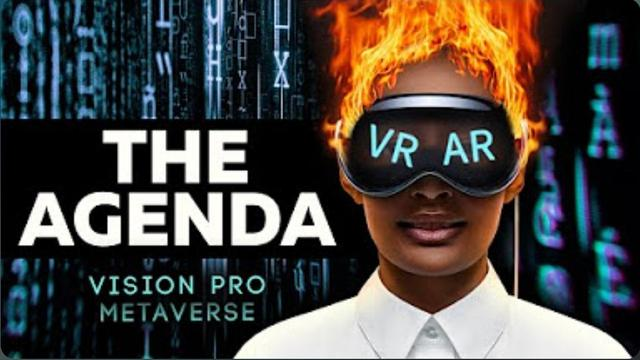
Understanding Augmented Reality and Its Potential Risks
Imagine a world where digital wonders seamlessly blend with reality, where your surroundings transform into an interactive canvas of endless possibilities. This captivating fusion of the physical and digital realms has come through with the help of a technology called Augmented Reality, which transforms the way we perceive and experience the world into something very interesting and innovative.
So, what is Augmented Reality? Augmented Reality, or AR, is a technology that overlays digital information such as images and 3D models onto the real-world environment in real time. It enhances the user's perception of the physical world by blending digital content with their surroundings, often using devices like smartphones or AR glasses. AR finds application in gaming, navigation, education, healthcare, retail and more, providing attractive and immersive experiences.
Of course, there are some benefits in AR technology, but is it really all good for us, or does it have a dark side? As we discussed before, transhumanism is one of the most important agendas of Iblis, which is being run by the secret societies, those who are in charge of mass manipulation and control of the society. Augmented Reality is another step accomplished in their agenda of transhumanism. The widespread adoption of the Augmented Reality could lead to constant surveillance, allowing those in control of the technology to monitor individuals' every move.
Using AR technology will make you even more vulnerable to share about yourself on social media. Just think of it, these platforms are creating large warehouses of data on all of us. Everything you post publicly or privately is being stored and analyzed and it's not only social media platforms, there's also a digital record of everything you buy, everything you watch, where you go and what happens at your house. There's even a facial recognition technology that creates an avatar for you, which you may think is cool, but they have your very mimics, facial features and physical characteristics stored. All of this data can be used to create a profile for you.

Even your location can be tracked in real time, putting you even more at risk. This means they've got you fully controlled and if they want, they can infringe on your privacy rights and enable a surveillance state on you. We know much of this has already been applied to people using smartphones and other digital devices. But by using AR technology, you're putting yourself even more in danger. Those with control over AR technology could manipulate the information presented to users, shaping their perception of reality. This could be used to control public opinion or influence social behavior.
Since the media and social platforms are controlled by the system, they have control over the information that's being spread throughout the Internet. And they decide which information should be spread and which one should be stopped or shared. For instance, content that focuses on morality or reveals the dark side of the system and spreads the truth is silently suppressed. This suppression causes the creators to feel demotivated and eventually stop what they are doing. They don't directly stop them because it would lead to people raising their voices. And as a consequence, we observe an increasing number of people getting involved in spreading immoral content as a means of earning a livelihood.
Augmented reality can be employed as a tool for social engineering, influencing individuals' thoughts, preferences, and behaviors. This could be exploited to control and manipulate societies. We're witnessing a significant rise in immorality on social media. We see people are potentially exposed to explicit content, and there's no government authority to stand against those platforms. Instead, they're being granted license to continue. Now imagine what happens if you and your children get used to AR.
Statistics
When augmented reality bleeds into daily life without boundaries, the human toll extends beyond digital privacy concerns and manifests as tangible, physical harm in our communities. A landmark study by Purdue University economists Mara Faccio and John McConnell revealed that in just the first five months following the release of the augmented reality game Pokémon GO, distracted drivers caused an estimated 145,000 traffic accidents, resulting in nearly 29,000 injuries, over 250 lost human lives, and up to $7.3 billion in societal and economic costs nationwide.
Echoing these concerns, research published in JAMA Internal Medicine analyzed social media and news reports during the game's launch period, uncovering over 113,000 traffic incidents linked directly to motorists and pedestrians whose focus was captured by virtual overlays instead of the physical road.

Further highlighting how deeply AR can alter personal risk perception, a study in the American Journal of Public Health found that 27% of surveyed players admitted to operating a vehicle while playing, 43% played while riding bicycles, and nearly a third sacrificed awareness of their real-world surroundings altogether while walking—a poignant reminder of how easily immersive digital experiences can jeopardize human safety and fracture our presence in the physical world.
Psychological Impacts and the Hazards of Immersive Environments
Some of the VR makers are even recommending that young children not use the sets at this point. There's warnings for under 13, given the whole issue of even the Internet and what that does with social media, for instance, to children, to the developing brain. So even with adults, there's not a lot of research on VR and what that does. There's an interesting article that came out recently, though, published in a journal called Computers and Human Behavior.
The title of it, interestingly, is Virtual Reality Induces Symptoms of Depersonalization and Derealization, a Longitudinal Randomized Control Trial, DPDR. And DPDR is essentially defined as being in kind of a matrix-type world that's not real to the point where the person actually feels that they're part of that medium, and they are separated, in a sense, from the real world. The virtual world kind of becomes the real world, and there's a blurring of what is real.
The brain is tricked into thinking they do live in this second-life kind of virtual matrix-type world. Trusting reports on Internet forums, a substantial number of people who've developed unpleasant symptoms of depersonalization, and derealization after virtual reality consumption. Their study on this one, this initial study, says, well, we can't show objectively that there's long-term harm, but this is, again, what's long-term? This is all new. There's several other studies, and these are mainly in the journal Computers and Human Behavior. One of them, the Impact of Immersion on the Perception of Pornography, a virtual reality study and in their summary, it thus appears experiencing pornographic video stimuli in high-immersive virtual environments increases the experience of presence as well as sexual-related perception.
So not surprisingly, common sense would say that it should be a more immersive experience sexually to be in a VR world than to be on just a computer screen. Or a 2D screen. Makes sense, but anyway, that's what they confirmed in their study. Another study, clearly the abstract, clearly the immersive capabilities of technology are not the only and likely not the strongest predictors of sexual arousal. And so, but they said it tempers that there is concerns that it could exacerbate compulsive pornography consumption.
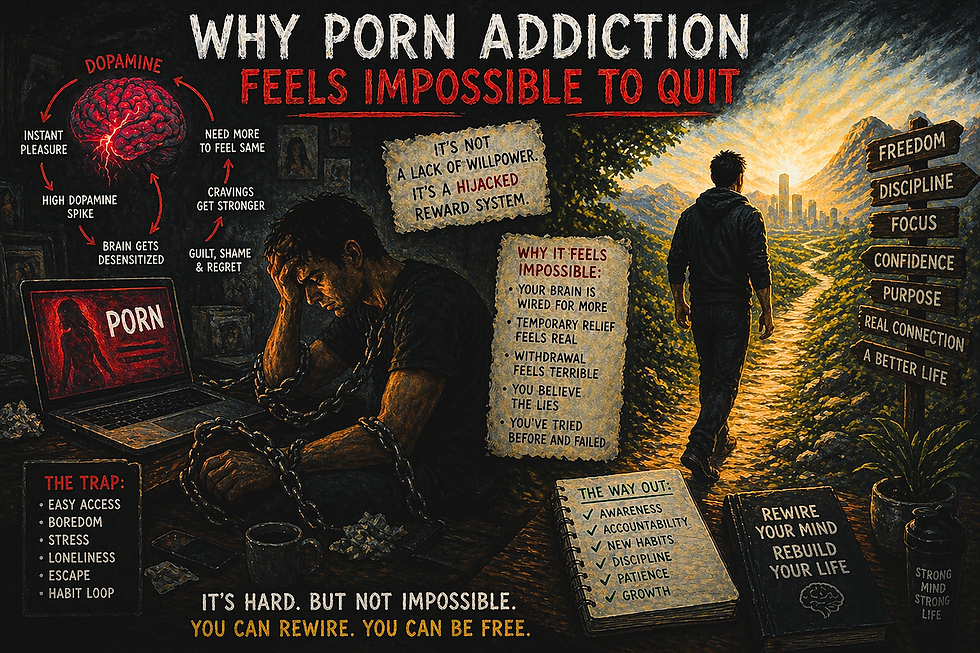
People on forums that are trying to quit pornography have said that this is way harder for them. One of them said he wishes he'd never seen VR. Compared to conventional pornography, it's just much more difficult for him to think about stopping in terms of the impact on his reward system. So what does that mean for us? You know, what do we do with our children? Do we all go out and buy VR headsets and let them sit around? This means you would have no power or ability to think because you have everything in front of you with just a few clicks. Although it sounds good, but the problem is that it makes people dumb. Because they will no longer put effort into learning things and gaining knowledge.
Social Engineering, Critical Thinking Loss and Corporate Control
Instead, they get the pre-designed information and accept it immediately instead of processing the information logically. They would not be able to think critically when it comes to false information. So in a world where the immorality and atheism is being widely promoted and people have lost the ability to stand against falsehood it would be very easy for Shaitan and his army to deceive people and make them follow the agenda of a system like sheep.
This is what we call modern slavery. Imagine your children growing up with the manipulated information that's being fed to them on a daily basis. Then what would happen if the greatest deceiver appears? They would easily follow him without even thinking because they no longer have the ability to think and distinguish between what's good and what's evil.
Augmented reality can lead to isolation by immersing individuals in personalized digital experiences reducing face-to-face interactions and fostering a preference for virtual relationships. Iblis and his army are constantly trying to make ways in order to rip the fabric of the society apart and break the family ties. And today you no longer communicate with your family and your society directly but through devices and satellites.
Augmented reality can fuel materialism by enhancing shopping experiences promoting virtual goods and status symbols fostering social comparison on social media and intensifying marketing influence. The immersive nature of AR can make the acquisition of goods more enticing contributing to a culture that values material possessions. It is important to know that individuals with unhealthy condition are indeed very easy to be controlled and deceived because they have no health stability to even concentrate on what's good or bad for them.

This is a good opportunity for Satan to take action and mislead them. You might think that there are government bodies which are monitoring these technologies and ensure that it only benefits humanity as a whole and there is no harm to the users. This is indeed something that people have been brainwashed to believe because the government is mostly being run by the wealthy individuals or in other words, the politic is being run by wealthy organizations and they are the ones who own the technology so they will surely support these technological advancements and legalize them even if they are harmful. And in order to put the blame away they just put some terms and conditions for the users and put some warnings which are not easily visible to the users. And unfortunately everyone accepts those terms and conditions without even reading them.
Islamic Perspective
From an Islamic perspective, technologies like Augmented Reality and Virtual Reality—while possessing neutral utility—can easily become instruments of deception and distraction if they sever man's connection from physical reality, destroy critical thinking, and foster spiritual isolation.
Islam places immense value on preserving the human intellect and safeguarding moral consciousness; when immersive digital environments normalize immorality, fuel mindless consumerism, and manipulate human perception, they serve as subtle mechanisms for Shaitan to lead humanity into modern bondage. Muslims are instructed to remain vigilant against such covert allurements and protect their hearts and families from spiritual heedlessness.
God Almighty warns humanity in the Holy Quran against falling into the deceptive traps of Satan: "O mankind, indeed the promise of Allah is truth, so let not the worldly life delude you and be not deceived about Allah by the Deceiver. Indeed, Satan is an enemy to you, so take him as an enemy. He only invites his party to be among the companions of the Blaze." (Holy Quran 35:5-6)
Conclusion
Augmented and Virtual Reality represent a double-edged sword that extends far beyond mere technological innovation, posing profound risks to human privacy, psychological well-being, and spiritual autonomy. By replacing authentic human connection and critical reasoning with manufactured digital realities, these platforms create an environment where manipulation and moral decay can quietly thrive.
Safeguarding ourselves and future generations requires conscious awareness, strict boundaries on screen immersion, and a firm commitment to truth over digital illusion. Ultimately, maintaining our intellect, values, and grounded sense of reality remains our greatest defense against falling blindly into modern systems of control.


Comments