
Social Media Addiction (Illuminati Agenda)

Introduction
One billion of us own a smartphone and we know how addicting it can be. One former Google employee says this is no accident; indeed, it is by design, and he became troubled by the relentless efforts of app developers to keep us glued to the gadgets. The goal is simple: to keep us on our devices longer. Why? Because for any company whose business model is advertising, or engagement-based advertising, meaning they care deeply about the amount of time someone spends on the product, they make more money the more time people spend.
The Engineered Addiction and the Collapse of Social Fabric
Recent data supports this reality. According to DataReportal, the average person now spends about 6 hours and 40 minutes per day on the internet, and more than 2 hours and 30 minutes of that is spent on social media alone. Globally, Facebook users collectively spend billions of hours every single day scrolling, liking, and reacting. The game, therefore, becomes how can I throw different persuasive techniques at people to get them to stay as long as possible and to come back tomorrow.
If the thought process that went into building these applications, Facebook being the first of them to really understand it, was all about how do we consume as much of your time and conscious attention as possible, then the method had to be psychological. That means giving you a little dopamine hit every once in a while, because someone liked or commented on a photo or a post or whatever, and that’s going to get you to contribute more content, and that’s going to get you more likes and comments on it.
It’s a social validation feedback loop, and it’s exactly the kind of thing that a hacker would come up with because you’re exploiting a vulnerability in human psychology. Studies from Harvard University have shown that when people talk about themselves online and receive positive feedback, the brain’s reward centers activate in the same way they do with food, money, or even addictive substances.

I think that the social media inventors understood this consciously, and they did it anyway. I think deep down, in the recesses of our minds, we kind of knew something bad could happen. It literally is a point now where we have created tools that are ripping apart the social fabric of how society works. According to the Pew Research Center, about 64% of adults say social media has a mostly negative effect on the way things are going in their country, and nearly 70% say it increases misinformation and division.
I would encourage all of you, as the future leaders of the world, to really internalize how important this is. If you feed the beast, that beast will destroy you. If you push back on it, we have a chance to control it and rein it in. It is a point in time where people need to break away from some of these tools and the things that they rely on. The short-term dopamine-driven feedback loops that we have created are destroying how society works. There is no civil discourse, no cooperation, misinformation, mistruth, and this is not an American problem. This is a global problem.
For example, WhatsApp misinformation has been linked to mob violence in countries like India, and social media manipulation has influenced elections, public opinion, and social harmony in multiple regions of the world. We are in a really bad state of affairs right now, in my opinion. It is eroding the core foundations of how people behave by and between each other. I don’t have a good solution.
My solution is I just don’t use these tools anymore. Bad actors can now manipulate large swaths of people to do anything they want. Research from MIT found that false news spreads six times faster on social media than true news, simply because it is designed to be more emotionally engaging.
Spiritual Consequences, Psychological Manipulation, and the Illusion of Fulfillment
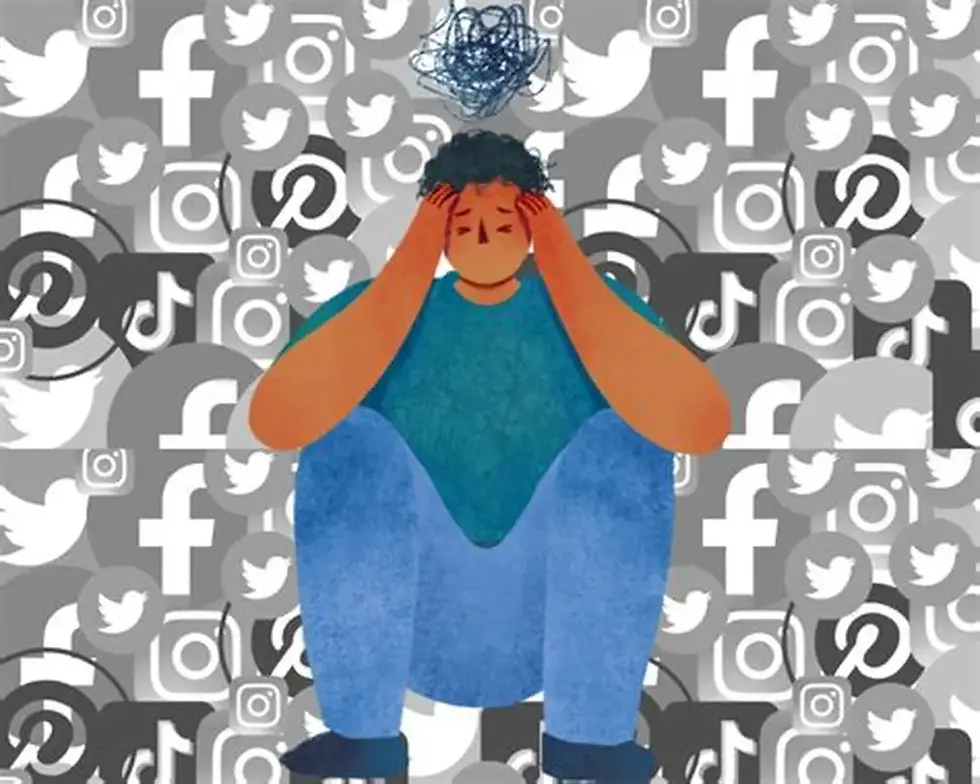
We compound the problem because we curate our lives around this perceived sense of perfection. We get rewarded in these short-term signals, hearts, likes, thumbs up, and we conflate that with value and truth. Instead, what it really is, is fake, brittle popularity that is short-term and leaves you even more empty than before. Psychologists have found that heavy social media users are significantly more likely to report feelings of loneliness, anxiety, and depression, even though these platforms promise connection.
You don’t realize it, but you are being programmed. You sit there, scrolling endlessly, and time disappears. Infinite scrolling was intentionally designed to remove stopping cues, so your brain never gets the signal to stop. The average person checks their phone about 96 times a day, which means once every 10 minutes.
To control someone through social networks doesn’t necessarily mean you have his videos or pictures. Rather, you can also put programs on those social media platforms to change his behavior, to destroy his morals and beliefs, and to take him away from the real values of his life. This is what they are doing with you. They make your mind busy with these things so that you don’t have time for other important issues. In other words, they make you a slave of the system.
Through those specific tools, the Devil steals your time because there is almost an infinite scrolling tab which traps you and sucks your lifetime away. In fact, you’re sitting alone busy with those networks and think that you are connected with the entire world. That’s how communities weaken, because physical relationships are replaced by digital illusions. According to studies, despite being more connected than ever online, loneliness has reached record highs, especially among young people.

The Prophet ﷺ said that the feet of the son of Adam will not move on the Day of Judgment until he is asked about four things, and one of them is his life and how he spent it. When you look at the statistics today, the reality becomes frightening. If someone spends 3 hours per day on social media, that equals more than 45 days every single year.
Over 10 years, that becomes more than a full year of life spent scrolling. Many people become so addicted to social media and start saying, “I have 5,000 followers,” and they develop a false sense of accomplishment. You ask them after five or six hours online what meaningful thing they did, and often there is nothing real to show for it except posts and likes. Yet they walk around as if they achieved something great.
Our lives have become so attached to it that it brings unnecessary stress and sadness because you are constantly comparing your life to others. You see only the highlight reels of others, their vacations, their celebrations, their successes, and you begin to feel that your own life is lacking. But what you don’t see is their struggles, their pain, and their reality. People select their pictures carefully. They present perfection, not truth. This creates unrealistic expectations and dissatisfaction. Studies show that Instagram, in particular, has been linked to body image issues and low self-esteem among teenagers.
Conclusion
People show the world that they are living the life, but in truth, they are living a moment, not a life. Social networks are one of the biggest fitnah of this time because they are one of the easiest ways for your attention to be manipulated. They take your focus away from what truly matters. Every post, every like, every share spread influence. Sometimes people don’t realize that what they write can influence thousands or millions of others. Words written online do not disappear. They spread, they get repeated, and they shape minds.
Subhan Allah, many of us have the Quran on our phones, yet days pass without opening it, while hours pass scrolling other apps. According to surveys in Muslim-majority countries, many Muslims spend several hours daily on entertainment apps but only minutes, if any, on religious reading. This is not because the Quran is unavailable, but because attention has been captured elsewhere.
The reality is that time is life. Every minute spent is a minute gone forever. Social media itself is not evil, but its unchecked use can slowly consume purpose, attention, relationships, and spiritual focus. You don’t realize it while it’s happening, but over years, it shapes your habits, your thinking, your priorities, and ultimately your life.


Comments