
Between God and the Devil - The Battle You Can’t See
- Hamza Nasir
- Dec 29, 2025
- 6 min read

The Reality of the Devil in Islam
Who is the devil? Is he real, or merely a figment of human imagination? Is he a philosophical concept, or an actual being? According to the Qur’an, the devil is very real. His substance exists, even though we cannot see him. He lived before humanity and is still alive today. This alone makes the subject both profound and fascinating.
The Arabic word often translated as “devil” comes from a root that conveys rebellion and distance. The devil refers to any entity—whether from humans or jinn—that rebels against Allah and turns away from truth. In this sense, the devil exists in two forms: from among the jinn and from among humans. Both seek to lead people toward evil.
Belief in the Unseen
Belief in the devil is tied to belief in the unseen (al-ghayb). Muslims believe in realities that cannot be perceived by the senses. We do not see Allah, yet we believe in Him. Angels exist, though we do not see them, and they are created from light. Likewise, jinn exist, though unseen, and they are created from smokeless fire.
Fire without smoke can exist in a form that is not visible, much like heat itself, which we can feel but not see. Therefore, the existence of jinn—and by extension the devil—is not irrational within the Islamic worldview.
Both types of devils attempt to lead humans toward evil. Devils from the jinn whisper directly into the hearts of people in ways that cannot be heard or seen. Devils from among humans, however, whisper through words and actions—suggesting wrongdoing openly, yet disguising it as advice or friendship. Such a devil could even be a close companion who encourages sinful behavior.
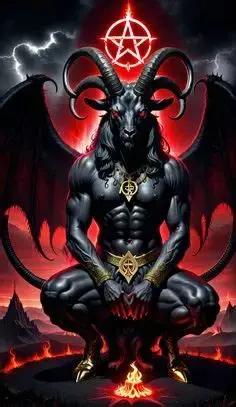
Iblis: The First Devil
It is important to understand that “devil” is a common noun, while Iblis is a proper name. Iblis was from among the jinn and was the first being to openly disobey Allah’s command.
Before becoming the devil, Iblis was a devoted worshipper of Allah. His worship was so sincere that Allah elevated his rank, allowing him to be in the company of the angels. However, Iblis was not an angel. This distinction is crucial, because angels do not disobey Allah—they act only as commanded.
When Allah created Adam, the first human being, He commanded all the angels to bow to Adam. All of them obeyed—except Iblis. Although he was among them, he refused to bow. The Qur’an clarifies that this exception does not mean Iblis was an angel; rather, he was a jinn who had been elevated due to his worship.
Iblis refused because of arrogance. He argued that Adam was created from clay, while he himself was created from smokeless fire, which he believed made him superior. This pride led him to disobey Allah openly.
Arrogance and Disobedience
This act of defiance placed Iblis in the worst possible position before Allah. His sin was not merely disobedience, but arrogance—believing he knew better than Allah. As a result, Allah condemned him, and Iblis declared that he would attempt to mislead Adam and his descendants out of spite.
This arrogance, known in Arabic as kibr, is a grave sin. Only Allah is truly great. No created being—human, jinn, or angel—has the right to elevate themselves above Allah’s command.
Misunderstanding the Role of the Devil
Many people mistakenly believe that humans commit sins only because of the devil. This leads to questions such as: Why did Allah create the devil? or Why doesn’t Allah destroy the devil so people won’t sin? This is a misunderstanding. The devil has no power beyond whispering. He cannot force anyone to commit sin.
Before Iblis became the devil, there was no other devil to mislead him—yet he still disobeyed Allah. Why? Because of his own nafs (ego). Even if the devil did not exist, human beings would still possess desires and inclinations that could lead them to sin. This world is a test for both humans and jinn. Allah did not create Iblis as a devil. Iblis chose to become one. The same is true for all devils: they choose disobedience.

Adam, the Devil, and the Purpose of Life
After Adam was created, Allah granted him and his wife access to Paradise, allowing them to enjoy everything except one tree. The devil whispered to them, and they eventually ate from it. As a result, they were sent down to the earth. Allah already knew this would happen. The tree was part of the test. This is the key lesson: life itself is a test.
Iblis was the first of the devils and became their leader. All devils serve as tools within this test, even as they themselves are being tested. Humans are not condemned because of the devil but judged by how they respond to temptation.
The Balance Between the Devil’s Power and God’s Mercy
One of the great scholars of Hadith reports in his Sunan that the devil made a supplication to Allah. He said, “O Allah, You have created me to cause corruption and misguidance among the children of Adam, but I have no power over them unless You allow me. So grant me the ability to mislead the children of Adam.”
Allah, the Most High, granted him a measure of permission. The devil then asked, “O Allah, increase me in this power.” Allah responded by saying that whenever a child of Adam is born, a devil is also born. In other words, for every human being that comes into existence in this world, Allah allows a corresponding devil to exist as part of the test of life.
Still unsatisfied, the devil asked again, “O Allah, increase me even more.” At that point, Allah granted him the ability to flow through the children of Adam like blood flows through the veins. This means that the devil can whisper into the hearts and minds of people in such a subtle way that those thoughts may seem like one’s own, when in reality they are evil suggestions planted by the devil.
The devil asked yet again for more power. In response, Allah revealed a verse commanding him to gather his forces—his armies, his followers, and his means—and to wage his efforts against humanity. He was allowed to promise people wealth, pleasure, and success. However, Allah made it clear that whatever the devil promises is nothing but an illusion, a mirage, and a lie with no reality.
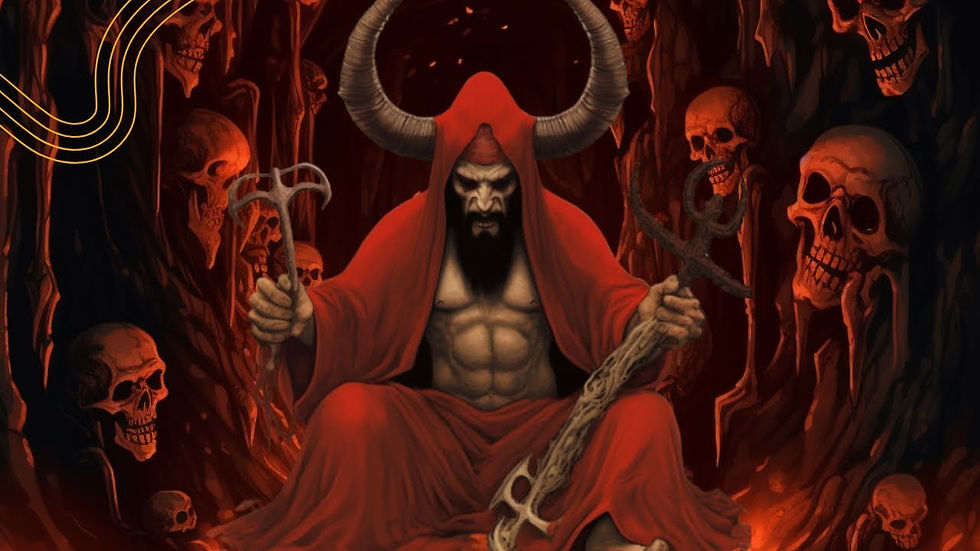
Allah’s Protection for Humanity
When Adam heard of the supplication of the devil, he turned to Allah and said, “You have given the devil so much power and authority over me and my children. What will You give us in return, O Allah?”
Allah answered Adam with mercy and reassurance. He said that no child of Adam would be born except that two angels would be assigned to protect him from the evil of the devil. This is in accordance with what Allah mentions in the Qur’an: that every human being has angels who alternate, guarding him from the front and from the back by the command of Allah.
In reality, at any given time, a human being is surrounded by multiple angels. Two angels record deeds—one on the right recording good deeds and one on the left recording bad deeds. Two more angels protect the person from harm, one in front and one behind, and they take turns.
In addition, there is another angel who encourages goodness, whispering reminders such as saying Subhan Allah, Alhamdulillah, and encouraging righteous actions. Thus, while the devil works alone, the believer is supported by multiple angels.
Hearing this, Adam was pleased, but he asked Allah for even more.
The Multiplication of Good Deeds
Allah then promised Adam that for every bad deed, only one sin would be recorded—or it could even be erased through forgiveness. But for every good deed, Allah would multiply the reward and record it as ten good deeds. Adam rejoiced at this generosity, yet he still asked for more.

Allah then gave him an even greater promise: that His forgiveness would remain open for as long as the soul remains in the body. As long as a person is alive, the door of repentance is never closed.
Adam asked one final time for more reassurance. In response, Allah revealed one of the most powerful and hope-giving messages in the Qur’an—a verse that scholars have described as the greatest verse of hope and happiness.
Allah declares that people should never despair of His mercy. He loves to forgive, and He forgives all sins—past, present, and future. Indeed, He is the Most Forgiving, the Most Merciful.
Conclusion
The devil is real, but his power is limited. He whispers, invites, and deceives—but he cannot compel. Responsibility ultimately lies with the individual. Islam teaches that arrogance, not ignorance, was the devil’s downfall, and humility and obedience are the path to success.
Life, in its entirety, is a test—and understanding the role of the devil helps clarify why free will, accountability, and moral struggle are essential parts of that test. While the devil has been granted certain abilities to test humanity, Allah has surrounded human beings with far greater mercy, protection, and opportunity for forgiveness.
Allah did not create humans to punish them, but to guide them, forgive them, and ultimately admit them into Paradise. No matter how strong the whispers of the devil may seem, Allah’s mercy is stronger, wider, and always within reach.


Comments